

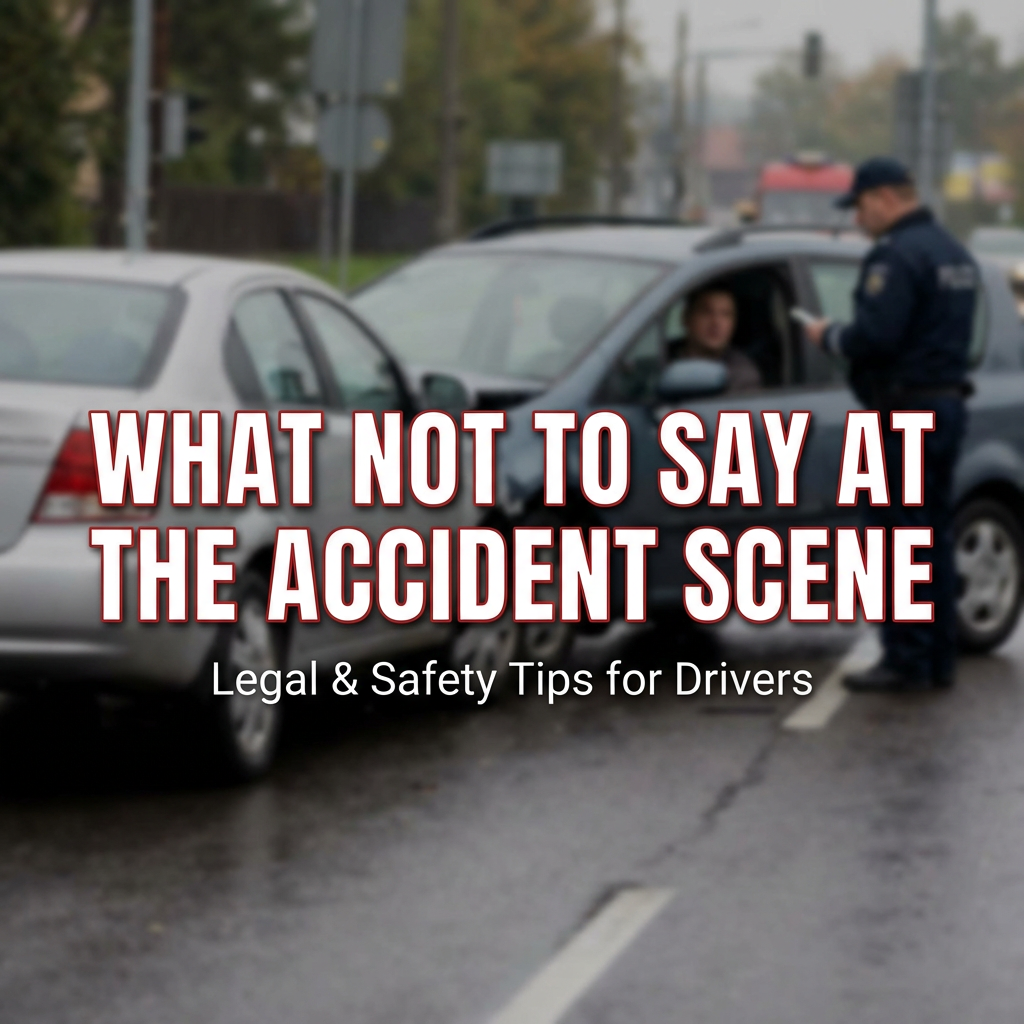
What Not to Say at the Accident Scene
An accident scene is rarely calm. People are shaken, adrenaline is high, and conversations happen quickly—often before anyone has had time to fully understand what just occurred. In those moments, most people are trying to be polite, cooperative, and reassuring. They want to calm the situation down, avoid conflict, and move on.
Unfortunately, some of the most common things people say at the accident scene can create serious problems later—even when those statements are made in good faith.
What you say in the minutes after an accident can affect how fault is viewed, how injuries are evaluated, and how insurance companies build their narrative about the claim. Knowing what to do after an accident includes understanding what not to say in the moments immediately following a crash.
Why Words Matter More Than You Expect
Insurance companies treat early statements as part of the claim file. Those statements may show up in:
-
Police reports
-
Adjuster notes
-
Recorded statements
-
Witness recollections
Once something is documented, it becomes a reference point. Even harmless remarks can later be interpreted as admissions of fault or proof that injuries weren’t serious.
The key issue is this: the accident scene is the worst time to be definitive. You don’t yet have the full picture—about fault, about injuries, or about what evidence exists.
“I’m Sorry” and Other Apologies
Many people apologize as a reflex. “I’m sorry” often means:
-
“Are you okay?”
-
“That was scary.”
-
“I didn’t want this to happen.”
But insurance companies may interpret it as:
“I caused this.”
Apologies can be used to support fault arguments, especially if liability is disputed.
Better approach: Stay calm and check on safety without apologizing in a way that can be misconstrued.
“I’m Fine” or “I’m Not Hurt”
This is one of the most damaging statements people make, and it’s almost always unintentional.
Why? Because you may genuinely believe it in the moment. But injuries often develop later:
-
Whiplash and soft-tissue symptoms worsen over 24–72 hours
-
Back pain can intensify as swelling increases
-
Concussion symptoms may appear later (headache, dizziness, light sensitivity)
If you later seek treatment after saying you’re fine, insurers may argue your injuries are exaggerated or unrelated.
Better approach: If asked about injuries, it’s safer to say you’re not sure yet and you want to be evaluated.
Speculating or Guessing About What Happened
Statements like:
-
“I didn’t see you.”
-
“I may have been distracted.”
-
“I don’t know what I was thinking.”
-
“It happened so fast.”
can be interpreted as fault admissions.
Even if you’re just describing confusion, insurers may later present it as proof of negligence.
Better approach: Stick to basic facts and avoid guessing.
Making Statements About Fault
Fault isn’t decided at the scene. It’s determined by evidence, investigation, and sometimes legal standards.
Even if you think you know what happened, there may be:
-
Surveillance video
-
Witnesses
-
Traffic camera footage
-
Vehicle data
-
Road condition issues
Deciding fault too early can lock you into a narrative that later turns out to be incomplete.
Talking Too Much to the Other Driver
Some people try to “work it out” on the spot. They share too many details, agree on a story, or discuss injuries casually. Later, those conversations can be repeated differently by the other party or used in unexpected ways.
Keep it professional, short, and factual.
Speaking Too Freely With the Insurance Adjuster
Adjusters often call quickly. The conversation may feel friendly, but it’s still part of a claim investigation. Early statements are often incomplete because:
-
Symptoms may not have developed
-
Medical evaluation hasn’t happened yet
-
You don’t know the full scope of injury
Being cooperative doesn’t mean being overly detailed.
What You Can Say Safely
You don’t need to be uncooperative. It’s appropriate to:
-
Provide your name and required information
-
Confirm basic facts (location, time)
-
Ask for medical help if you need it
-
Cooperate with police instructions
What’s unnecessary is speculation, blame, apologies, or definitive injury statements.
Why Saying Less Often Protects You More
Many people later regret saying too much. Very few regret being careful.
Keeping statements minimal doesn’t mean being difficult. It means recognizing that you don’t yet have complete information.
Final Thought
Accident scenes are stressful, and it’s normal to want to calm things down. But certain statements—apologies, speculation, and “I’m fine”—can create long-term problems.
Stay calm, keep statements factual, and focus on safety and documentation first. If you have questions about how early statements may affect a claim, speaking with a personal injury lawyer early can help prevent mistakes that are difficult to undo.