

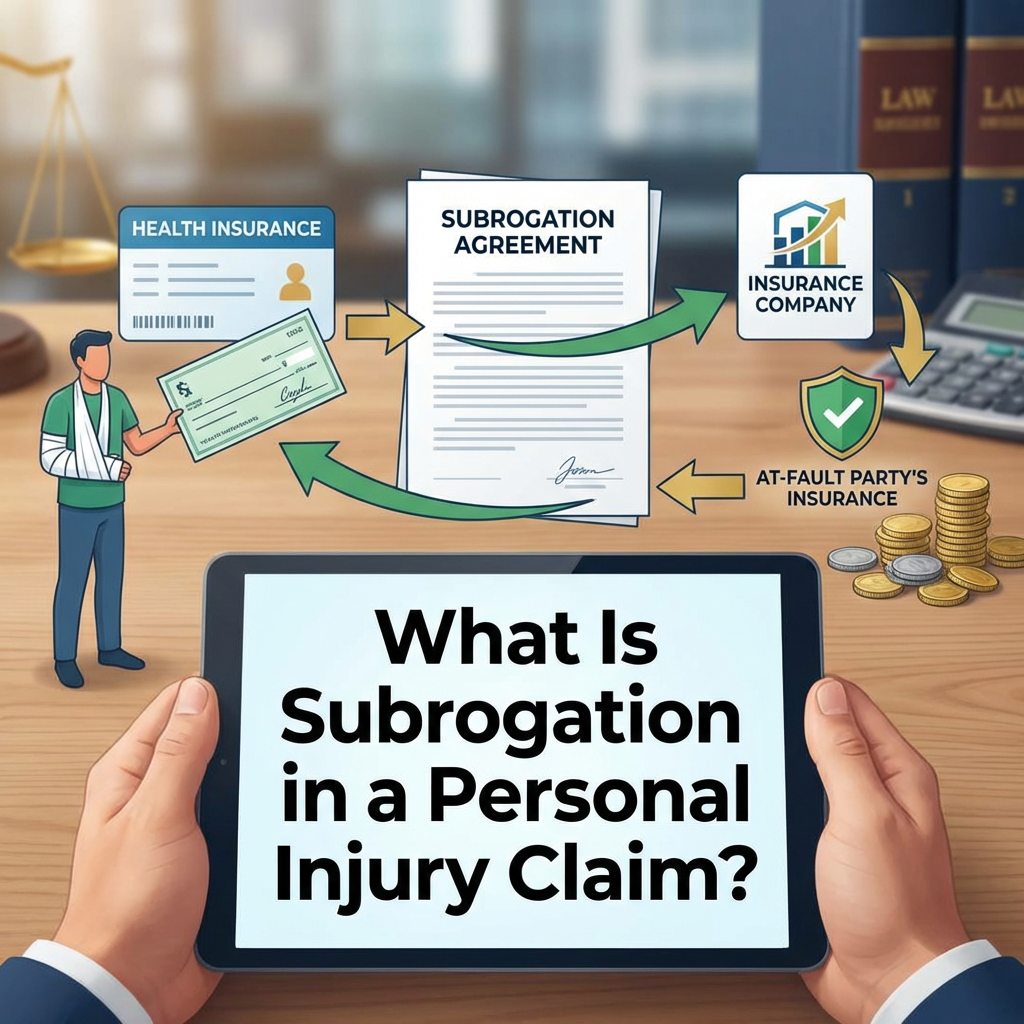
What Is Subrogation in a Personal Injury Claim?
After an accident, medical treatment often begins before an injury claim is resolved. In many cases, health insurance companies, medical providers, or other benefit programs may pay for medical care while the claim is still pending.
Later in the claim process, accident victims sometimes encounter a term that may be unfamiliar: subrogation.
Subrogation is a common concept in personal injury claims, but many people first learn about it only after receiving a notice from a health insurer or medical provider.
Understanding what subrogation means and how it affects injury claims can help clarify an important part of the settlement process.
What Subrogation Means
Subrogation refers to the legal right of an insurance company or benefit provider to seek reimbursement for certain expenses after an injury claim is resolved.
In simple terms, when a third party is responsible for an accident, the insurer that paid for medical treatment may attempt to recover those costs from the settlement or judgment obtained in the claim.
For example, if a health insurance company paid for accident-related medical care, it may later seek reimbursement from the funds recovered through the injury claim.
Subrogation allows the insurer to recover expenses that were paid on behalf of the injured person when another party is ultimately responsible for the damages.
Why Subrogation Exists
Subrogation exists because insurance policies and benefit programs often contain provisions allowing insurers to recover expenses when another party is legally responsible for the injury.
Without subrogation, insurance companies could end up paying for damages that were actually caused by someone else.
Subrogation provisions are common in many types of insurance and benefit programs, including:
-
health insurance policies
-
employer-sponsored benefit plans
-
Medicare or Medicaid programs
-
certain medical payment coverage policies
These provisions allow insurers to seek reimbursement when a personal injury claim results in compensation related to medical expenses.
How Subrogation Appears in Injury Claims
Subrogation often becomes visible during the later stages of a personal injury claim.
For example, after an accident, an injured person may receive medical treatment that is initially paid by their health insurance provider.
Later, when the personal injury claim is resolved, the health insurer may notify the parties involved that it intends to seek reimbursement for some of the medical expenses it paid.
This notice may be referred to as a subrogation claim or lien, depending on the circumstances.
Subrogation issues are often addressed during the settlement process because the reimbursement request may affect how settlement funds are distributed.
Common Sources of Subrogation Claims
Several types of organizations may assert subrogation rights after an injury claim.
Health Insurance Companies
Private health insurers frequently include subrogation provisions in their policies.
If the insurer paid for accident-related treatment, it may later seek reimbursement from the personal injury settlement.
Employer Benefit Plans
Many employer-sponsored health benefit plans also contain reimbursement provisions.
These plans may request repayment for certain medical expenses that were covered during the treatment process.
Government Benefit Programs
Government programs such as Medicare and Medicaid may also have reimbursement rights when they pay for accident-related medical care.
These programs often have specific procedures that must be followed when resolving personal injury claims.
Medical Payment Coverage
Some automobile insurance policies include medical payments coverage, sometimes referred to as MedPay.
This coverage may pay certain medical expenses regardless of who caused the accident.
When another party is later determined to be responsible for the crash, the insurer providing MedPay benefits may seek reimbursement through subrogation.
How Subrogation Affects Settlement Discussions
Subrogation can influence the financial aspects of a personal injury settlement.
When reimbursement claims exist, a portion of the settlement may be used to repay the insurer or benefit provider that paid the medical expenses.
For this reason, subrogation claims are often addressed during settlement negotiations.
Insurance companies evaluating injury claims often consider several factors when determining settlement value, including medical expenses and documentation. This broader evaluation process is explained in How Insurance Companies Decide What Your Case Is Worth.
Understanding the existence of potential reimbursement claims can help clarify how settlement funds may ultimately be distributed.
Subrogation and Medical Documentation
Medical records and billing documentation often play an important role in subrogation claims.
Insurers may review records to determine:
-
which treatments were related to the accident
-
how much the insurer paid for those services
-
whether the expenses are eligible for reimbursement
Accurate documentation helps clarify which medical costs may be included in the reimbursement request.
Medical documentation also plays an important role in the overall evaluation of injury claims. As discussed in How Insurance Companies Evaluate Evidence in Injury Claims, insurers often rely heavily on medical records when reviewing accident-related injuries.
Why Subrogation Can Be Confusing
Subrogation can sometimes feel confusing because it introduces another party into the settlement process.
Accident victims may initially believe that a settlement represents the total compensation they will receive.
However, when subrogation claims exist, some portion of the settlement may be used to reimburse insurers or benefit providers for medical expenses they previously paid.
Because of this, subrogation issues are often addressed before a claim is fully finalized.
These considerations may arise alongside other settlement-related steps, such as reviewing settlement documentation. For example, finalizing a claim often involves signing a settlement release, which is discussed in What Is a Personal Injury Settlement Release?
The Role of Subrogation in the Claim Process
Subrogation is one of several factors that may arise during the later stages of a personal injury claim.
By the time subrogation issues appear, the claim has often progressed through earlier stages such as:
-
accident investigation
-
medical treatment
-
documentation of damages
-
settlement negotiations
These stages help determine the overall value of the claim and the compensation that may be available.
Subrogation then addresses how certain medical expenses may be reimbursed after the claim is resolved.
The Takeaway
Subrogation is a legal concept that allows insurance companies or benefit providers to seek reimbursement for medical expenses they paid when another party is responsible for an accident.
These reimbursement claims often arise when medical treatment was initially covered by health insurance, government benefit programs, or other insurance policies.
Because subrogation may affect how settlement funds are distributed, it often becomes an important issue during the later stages of a personal injury claim.
Understanding what subrogation means can help clarify one of the financial aspects of resolving an injury claim after an accident.