

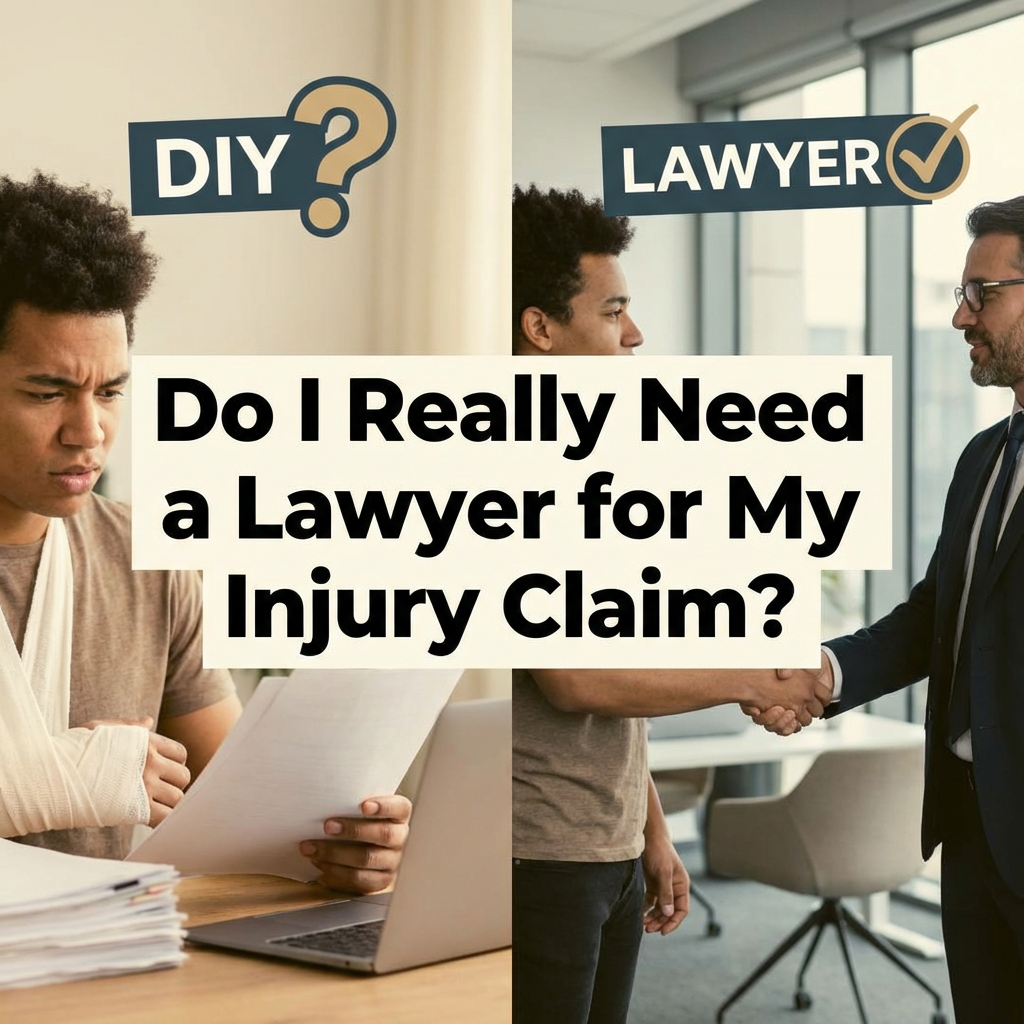
Do I Really Need a Lawyer for My Injury Claim?
After an accident, one of the most common questions people ask themselves is:
“Do I really need a lawyer for this?”
It’s a fair question.
Not every accident requires legal representation. Some claims are minor. Some resolve smoothly. Some don’t justify the time or involvement of an attorney.
But many people who think they don’t need a lawyer only realize later that they underestimated the complexity of their situation — and by then, important decisions have already been made.
This article explains when you may not need a lawyer, when you probably do, and why the answer depends more on risk and documentation than on the size of the accident.
The Short Answer: It Depends on the Risk
The need for a lawyer isn’t determined by how dramatic the accident looked.
It’s determined by:
-
the severity of the injury
-
whether fault is disputed
-
whether treatment is ongoing
-
whether insurance is cooperative
-
whether documentation is clean
-
whether long-term effects are possible
The higher the risk of complication, the more valuable early legal guidance becomes.
Situations Where You Might Not Need a Lawyer
There are cases where handling the claim yourself may be reasonable.
For example:
-
Minor property damage only
-
No physical injuries
-
No medical treatment required
-
Clear liability with cooperative insurance
-
Quick reimbursement for repair costs
In those cases, the claim may involve:
-
vehicle repair
-
rental reimbursement
-
minor inconvenience
When no injury is involved, and documentation is simple, legal representation may not add significant value.
But once medical treatment enters the picture, the risk changes.
The Moment Medical Treatment Begins, the Stakes Increase
As soon as you:
-
visit urgent care
-
go to the emergency room
-
start physical therapy
-
see a specialist
-
miss work due to pain
the claim becomes more complex.
Why?
Because now the claim involves:
-
medical bills
-
treatment timelines
-
causation issues
-
wage loss
-
pain and suffering
-
future medical possibilities
And insurance companies evaluate injury claims very differently than property claims.
Most People Underestimate Documentation Risk
Many injury claims lose value not because the injury isn’t real, but because:
-
treatment was delayed
-
gaps in care occurred
-
early statements minimized symptoms
-
documentation was inconsistent
-
social media created contradictions
-
quick settlement offers were accepted
If you’ve read the full guide on What to Do After an Accident, you already know how early mistakes quietly reduce leverage.
A lawyer’s role is often less about “fighting” and more about preventing those early mistakes.
When You Probably Should Speak to a Lawyer
There are certain situations where at least speaking to a lawyer is wise:
1. You Went to the ER
Emergency room visits often indicate a higher level of injury seriousness and increase claim complexity.
2. You Have Ongoing Pain
If symptoms last more than a few days and require continued treatment, documentation and valuation become important.
3. You Have a Head Injury or Concussion
These claims are often scrutinized heavily by insurers.
4. You Have Back or Neck Injuries
These injuries frequently involve causation disputes and pre-existing condition arguments.
5. The Insurance Company Is Pressuring You
Early settlement offers, requests for recorded statements, or aggressive questioning are signals that the claim may require guidance.
6. Fault Is Disputed
If the other driver is blaming you, the claim becomes evidence-driven.
7. A Commercial Vehicle Was Involved
Truck, rideshare, or work vehicle cases add layers of insurance complexity.
In these situations, even a consultation can clarify risk.
Why Insurance Companies Prefer Unrepresented Claimants
This isn’t about conspiracy — it’s about structure.
Insurance companies understand:
-
most people don’t know claim value
-
most people don’t understand documentation strategy
-
most people don’t anticipate future treatment needs
-
most people want quick closure
That doesn’t mean insurers are malicious. It means they are businesses evaluating risk and exposure.
When someone handles a claim alone, insurers often assume:
-
the person may accept a lower offer
-
early mistakes may go uncorrected
-
the claim may be undervalued naturally
Representation changes that risk profile.
“I Don’t Want to Sue Anyone”
This is one of the biggest reasons people hesitate.
Hiring a lawyer does not automatically mean:
-
filing a lawsuit
-
going to trial
-
escalating conflict
Many injury cases resolve without litigation.
Legal representation often involves:
-
organizing documentation
-
managing insurer communication
-
evaluating settlement offers
-
protecting timelines
Litigation is a tool — not the default.
“What If I Already Talked to Insurance?”
Many people delay calling a lawyer because they think:
-
“I already gave a statement.”
-
“I already talked to the adjuster.”
-
“I already started treatment.”
That doesn’t automatically eliminate your options.
But the earlier guidance begins, the more protective it can be.
If mistakes have already occurred, clarity can still improve outcomes going forward.
The Real Question: What Is the Risk of Handling It Alone?
Instead of asking:
“Do I need a lawyer?”
A better question might be:
“What is the risk of not having one?”
If the claim involves:
-
ongoing medical care
-
unclear long-term recovery
-
wage loss
-
fault disputes
-
insurance pressure
the financial risk of underestimating the claim may outweigh the hesitation.
Injury Claims Are About Leverage, Not Just Injury
Many people believe injury claims are about proving they’re hurt.
In reality, they’re about:
-
documentation
-
consistency
-
risk assessment
-
negotiation structure
-
leverage
The more complex the injury and documentation, the more structure matters.
If you want a deeper explanation of what lawyers actually do in these cases, see:
➡️ When to Hire a Personal Injury Lawyer (And Why It Matters)
That guide explains representation without hype or pressure.
The Takeaway
You may not need a lawyer for every injury claim.
But you should strongly consider at least speaking with one if:
-
medical treatment is ongoing
-
injuries involve the neck, back, or head
-
symptoms are delayed
-
insurance is pushing for quick resolution
-
fault is disputed
-
long-term impact is unclear
The cost of underestimating your injury can be permanent — especially if you accept a settlement too soon or create documentation gaps.
The safest approach is not panic.
It’s clarity.