

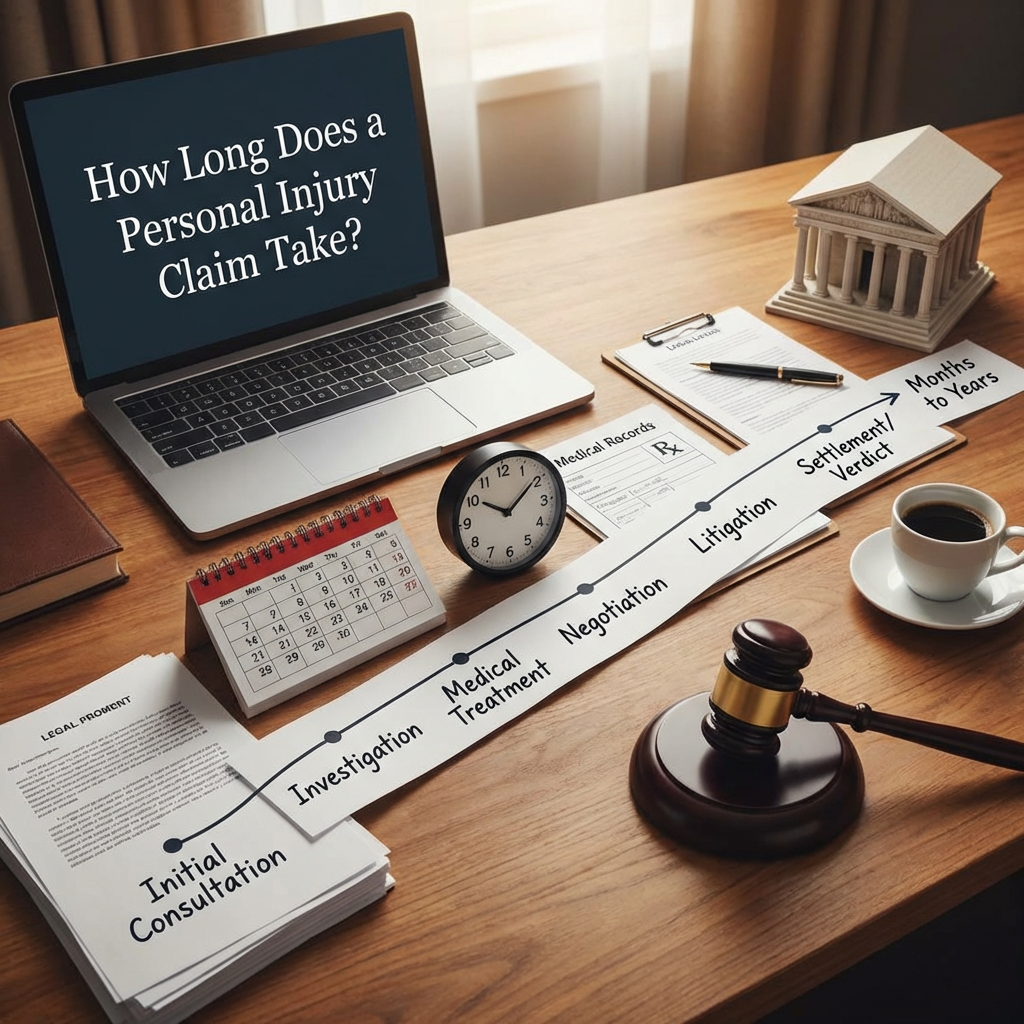
How Long Does a Personal Injury Claim Take?
After an accident, many people assume the claims process will move quickly.
The accident happens.
Medical treatment begins.
Insurance companies are notified.
Then the natural question arises:
How long will this take?
Unfortunately, there is no single timeline that applies to every injury claim. Some cases resolve in a few months, while others may take a year or longer.
The length of time often depends on several factors, including medical treatment, liability issues, insurance company procedures, and the overall complexity of the claim.
Understanding the typical stages of a personal injury claim helps explain why these cases sometimes take longer than people expect.
The First Phase: Medical Treatment
In most injury claims, the process begins with medical care.
After an accident, injured individuals may receive:
-
emergency room treatment
-
diagnostic imaging
-
follow-up physician visits
-
physical therapy
-
specialist evaluations
Insurance companies generally prefer to evaluate claims after the medical condition stabilizes.
This point is sometimes referred to as maximum medical improvement (MMI), meaning the patient has recovered as much as reasonably expected or their condition has stabilized.
Settling a claim too early can be risky. If additional treatment becomes necessary later, the claim usually cannot be reopened.
For that reason, many claims remain open while treatment continues.
The length of this phase varies widely depending on the injury.
Minor injuries may resolve in weeks. More serious injuries may require months of treatment.
The Second Phase: Gathering Documentation
Once treatment stabilizes, the next step typically involves gathering documentation.
Insurance companies review several types of records when evaluating a claim, including:
-
medical records
-
medical bills
-
diagnostic imaging reports
-
physician opinions
-
wage loss documentation
-
accident reports
-
witness statements
Medical providers often take time to produce complete records.
Hospitals, clinics, and therapy providers may require several weeks to process requests.
Because insurance companies rely heavily on documentation, the claim cannot move forward until the necessary records are collected and reviewed.
The Third Phase: Claim Evaluation
After documentation is submitted, the insurance company begins evaluating the claim.
Adjusters review the evidence to determine:
-
how the accident occurred
-
who may be responsible
-
the severity of the injuries
-
the financial impact of the accident
-
potential long-term consequences
This evaluation process may involve:
-
reviewing medical records
-
consulting supervisors
-
analyzing accident reports
-
calculating damages
As discussed in How Insurance Companies Decide What Your Case Is Worth, insurers use internal processes to estimate the potential exposure of a claim.
This stage may take time because larger claims often require additional internal review.
The Fourth Phase: Settlement Negotiations
Once the insurance company completes its evaluation, settlement discussions may begin.
Typically, the process includes:
-
submitting a demand package
-
reviewing the insurer’s response
-
negotiating settlement offers
Initial offers are often conservative. Negotiation usually involves multiple discussions before the parties reach an agreement.
The length of this phase can vary depending on:
-
how clearly liability is established
-
how serious the injuries are
-
how well the damages are documented
-
whether the parties disagree about the value of the claim
Negotiations may take weeks or several months depending on the complexity of the case.
When Liability Is Disputed
Some claims take longer because responsibility for the accident is unclear.
Insurance companies may investigate issues such as:
-
traffic law violations
-
right-of-way disputes
-
witness statements
-
vehicle damage patterns
-
accident reconstruction
If both drivers may share responsibility, negotiations may focus on determining fault percentages.
As explained in What Happens If You Are Partially at Fault for an Accident, shared responsibility can affect the value of the claim and sometimes extend the timeline.
Delays During the Review Process
Insurance companies sometimes take additional time to review claims.
This may occur when:
-
medical records are extensive
-
injuries are complex
-
future medical care is anticipated
-
wage loss documentation is incomplete
-
liability questions remain unresolved
Adjusters may also need approval from supervisors before making settlement offers.
These internal review processes can contribute to delays in the negotiation stage.
As discussed in Why Insurance Companies Stall Settlement Negotiations, delays are not always a sign that the claim is being denied. Sometimes the insurer is still evaluating the available documentation.
When a Lawsuit Becomes Necessary
If settlement negotiations do not lead to a fair resolution, a lawsuit may be filed.
Litigation introduces additional steps such as:
-
formal pleadings
-
discovery
-
depositions
-
expert evaluations
-
mediation
-
trial preparation
These procedures are governed by court rules and scheduling deadlines.
Because litigation involves additional legal processes, it may extend the timeline of a case.
However, many lawsuits still resolve through settlement before reaching trial.
Why Some Claims Resolve Faster Than Others
Several factors influence how quickly a claim may resolve.
Cases often move faster when:
-
liability is clear
-
injuries are moderate
-
treatment concludes quickly
-
documentation is straightforward
-
damages are easy to calculate
Claims may take longer when:
-
serious injuries are involved
-
treatment continues for many months
-
future medical care must be evaluated
-
liability is disputed
-
the insurance company challenges the value of the claim
The complexity of the case often determines the overall timeline.
Why Patience Matters in Injury Claims
One of the challenges of the claims process is that injured individuals are often dealing with:
-
medical recovery
-
financial pressure
-
uncertainty about the future
It is natural to want the claim resolved quickly.
However, rushing the process can sometimes result in settling before the full extent of the injury is understood.
Careful documentation and complete medical evaluation help ensure the claim reflects the true impact of the accident.
The Bigger Perspective
Personal injury claims involve multiple stages:
-
medical treatment
-
documentation collection
-
claim evaluation
-
settlement negotiations
-
potential litigation
Each stage serves an important purpose in determining how the accident affected the injured person and what compensation may be appropriate.
The timeline varies from case to case, depending largely on the severity of the injury and the complexity of the claim.
The Takeaway
The time required to resolve a personal injury claim depends on several factors, including:
-
the length of medical treatment
-
the complexity of the injuries
-
the availability of documentation
-
whether liability is disputed
-
how negotiations progress
Some claims resolve within a few months, while others may take longer to fully evaluate.
Understanding the stages of the process helps explain why injury claims sometimes take time and why careful documentation is important throughout the case.