

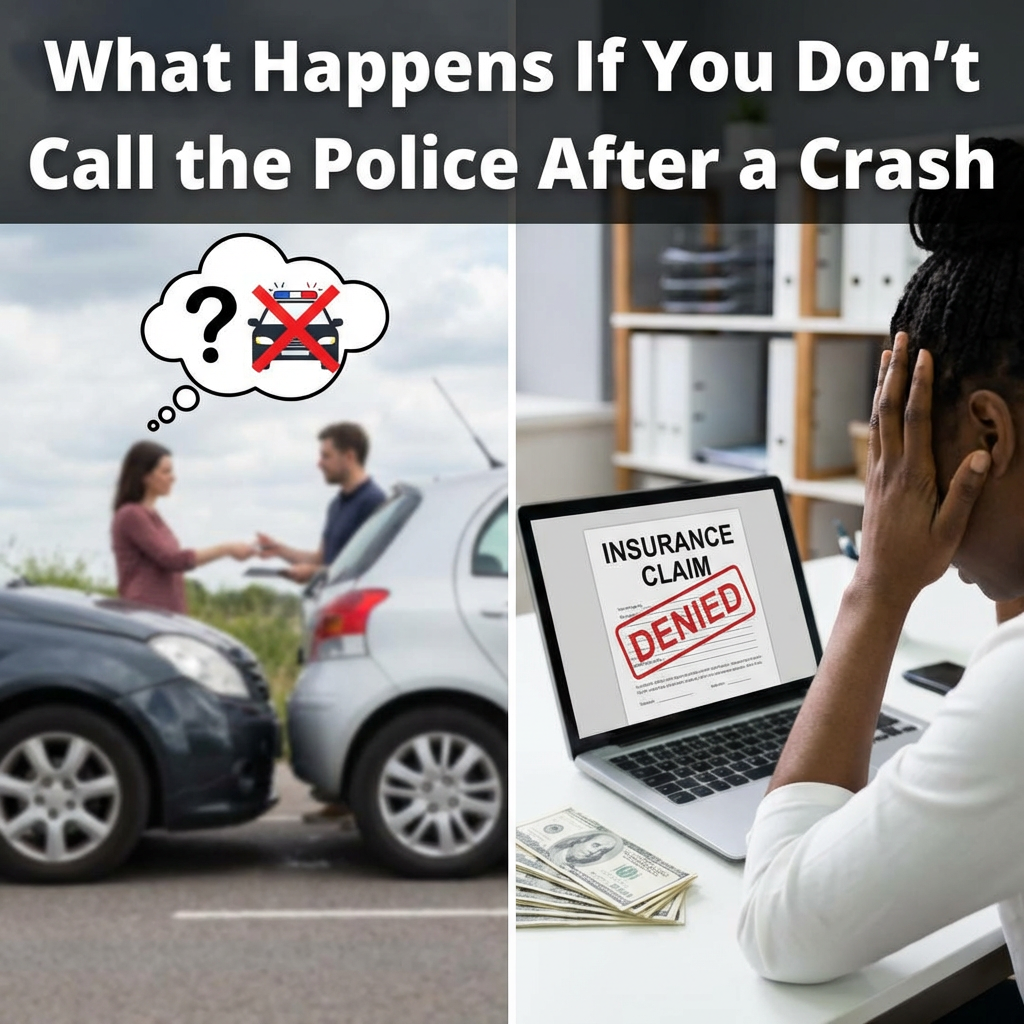
What Happens If You Don’t Call the Police After a Crash
After a car accident, people make quick decisions.
If the damage looks minor, if no one appears seriously hurt, or if the other driver suggests “let’s just handle it ourselves,” many people decide not to call the police.
It feels efficient.
It feels cooperative.
It feels like avoiding unnecessary drama.
But not calling the police can quietly create problems that don’t surface until days—or weeks—later.
This article explains what actually happens when police are not called to the scene, how it affects injury claims, and what to do if the decision has already been made.
Why People Skip Calling the Police
Most people don’t skip the police because they’re trying to hide something. They skip it because:
-
The accident seems minor
-
No one appears seriously injured
-
The other driver asks them not to call
-
They don’t want anyone to get a ticket
-
They’re in a hurry
-
They assume insurance will handle it
-
They believe exchanging information is enough
At the moment, it often feels reasonable.
But injury claims aren’t evaluated based on how reasonable the moment felt. They’re evaluated based on documentation.
And the police report is one of the strongest early pieces of documentation in any crash.
What a Police Report Actually Does
Many people think a police report is just paperwork.
In reality, it often becomes the foundational document of the claim.
A police report can include:
-
Date and time of crash
-
Location
-
Driver identities
-
Insurance information
-
Vehicle information
-
Witness names
-
Officer observations
-
Statements made at the scene
-
Diagram of the accident
-
Preliminary fault assessment
That document is time-stamped, neutral, and official.
Insurance companies treat it seriously.
When it’s missing, something else fills the gap — usually conflicting stories.
When There’s No Police Report, Fault Becomes More Complicated
If the other driver later changes their story, and there’s no police report, you may face:
-
A disputed liability claim
-
“Word versus word” arguments
-
Delays while insurers investigate
-
Increased pressure to settle quickly
-
Reduced settlement leverage
Even if fault seems obvious, without documentation, insurers often argue:
-
“There’s no independent verification.”
-
“We need further investigation.”
-
“The statements conflict.”
That delays resolution and reduces leverage.
No Police Report = More Scrutiny
When there’s no official report, insurers often increase scrutiny in other areas:
-
More detailed recorded statements
-
Requests for photos
-
Requests for repair documentation
-
Questions about scene details
-
Questions about injury timing
This can feel invasive — but it’s predictable.
Without early neutral documentation, the burden shifts toward the injured person.
It Also Affects Injury Credibility
If someone doesn’t call police and also doesn’t seek medical care immediately, insurers often combine those two facts and argue:
-
“The accident wasn’t serious.”
-
“If it was serious, police would’ve been called.”
-
“If someone was hurt, they would’ve said so at the scene.”
This is especially damaging in:
-
whiplash cases
-
delayed symptom cases
-
soft tissue injuries
-
concussion claims
The absence of documentation creates room for doubt.
What If You Didn’t Call the Police?
If the accident already happened and police weren’t called, all is not lost.
But documentation becomes more important.
You should:
1. Preserve All Photos
Vehicle damage.
Scene photos.
License plates.
Road conditions.
Traffic signals.
2. Write Down Your Recollection Immediately
Include:
-
Direction of travel
-
Speed
-
Statements made
-
Weather
-
Visibility
-
Position of vehicles
Memory fades quickly.
3. Identify Witnesses If Possible
Even after the fact, sometimes witnesses can be located.
4. Seek Medical Evaluation Promptly
This helps protect the injury timeline.
When You Should Always Call the Police
There are certain situations where calling police is not optional from a risk perspective:
-
Anyone reports pain
-
A commercial vehicle is involved
-
The other driver appears impaired
-
There is significant damage
-
Fault is disputed
-
Someone asks you not to call
If there is uncertainty, documentation is protection.
The Bigger Picture: Documentation Protects Claims
This issue connects directly to the broader strategy of what to do after an accident.
If you want the full roadmap on medical care, documentation, and avoiding early mistakes, read:
➡️ What to Do After an Accident
Because early documentation decisions affect everything that follows.
The Takeaway
Not calling the police after a crash doesn’t automatically destroy a claim.
But it removes one of the strongest early pieces of documentation and increases scrutiny in every other area.
Insurance companies rely on documentation — not assumptions, not fairness, not memory.
When documentation is thin, doubt increases.
When doubt increases, value decreases.
If you’re unsure after a crash, documentation is almost always safer than omission.