

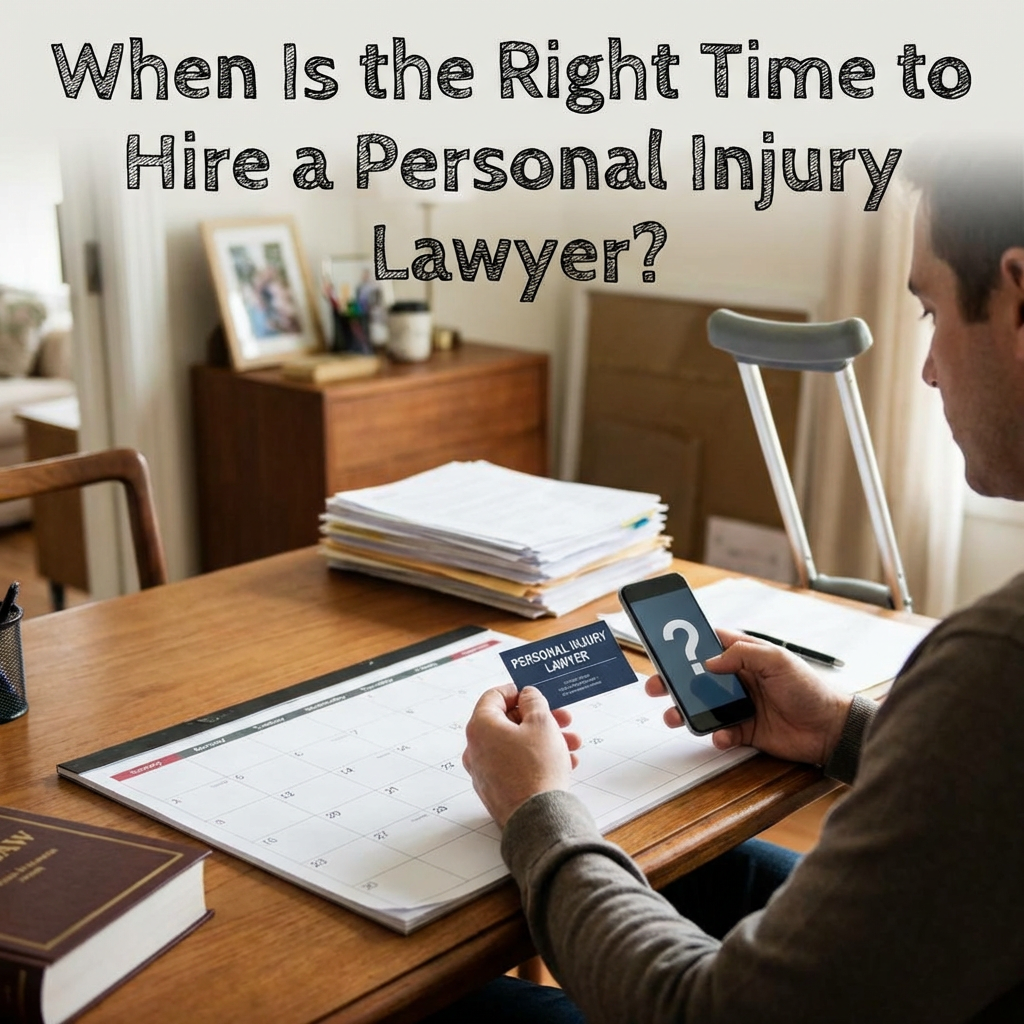
When Is the Right Time to Hire a Personal Injury Lawyer?
After an accident, most people don’t immediately think:
“I need a lawyer.”
They think:
-
“I hope everyone’s okay.”
-
“I’ll call insurance.”
-
“Maybe this will resolve quickly.”
-
“I don’t want to make this bigger than it needs to be.”
That instinct is understandable.
But one of the most important decisions in any injury claim is timing.
Not whether you can hire a lawyer.
But when you should.
The right time is often earlier than people realize.
You Don’t Need to Wait for Things to Get “Serious”
Many people assume they should only hire a lawyer if:
-
Surgery is required.
-
The claim is denied.
-
The insurer becomes aggressive.
-
A lawsuit is filed.
-
The case becomes complicated.
In reality, leverage in injury claims is often shaped early.
In my experience reviewing how claims evolve, early decisions tend to determine later outcomes.
Waiting until problems appear often means leverage has already shifted.
Early Guidance Prevents Early Mistakes
Most injury claims are not weakened by dramatic errors.
They’re weakened by small, avoidable ones:
-
Giving a recorded statement too soon.
-
Minimizing symptoms early.
-
Delaying medical care.
-
Missing treatment appointments.
-
Posting casually on social media.
-
Accepting early settlement discussions.
Early legal guidance often prevents these structural weaknesses.
Once documentation gaps exist, they’re difficult to repair.
Insurance Companies Begin Evaluating Immediately
Insurance companies begin evaluating claims almost immediately.
They assess:
-
Liability clarity.
-
Treatment timing.
-
Symptom consistency.
-
Injury type.
-
Documentation strength.
-
Credibility signals.
-
Litigation risk.
As discussed in How Insurance Companies Handle Injury Claims, early impressions often influence internal reserve calculations.
Those early reserves shape negotiation posture later.
Early structure matters.
You Don’t Have to Hire Immediately — But You Should Understand the System Early
There’s a difference between:
Hiring immediately
and
Understanding the claim system early
Many people benefit simply from understanding:
-
What not to say.
-
When to seek care.
-
How documentation affects value.
-
How insurance companies evaluate risk.
-
When settlement timing becomes critical.
Even early consultation can clarify strategy.
It doesn’t require immediate escalation.
The Risk of Waiting Too Long
Some people wait until:
-
Treatment has ended.
-
A low offer is made.
-
The claim stalls.
-
An adjuster becomes unresponsive.
By that point:
-
Statements may already be recorded.
-
Documentation gaps may exist.
-
Causation may be challenged.
-
Leverage may have decreased.
Late intervention can still help.
But early intervention prevents avoidable weaknesses.
Certain Situations Increase the Need for Early Representation
Some cases benefit from earlier legal involvement:
-
Disc injuries
-
Nerve involvement
-
Concussions
-
Surgery consideration
-
Commercial vehicle collisions
-
Disputed liability
-
Significant wage loss
-
Permanent impairment concerns
The more complex the injury or liability, the more structured the claim needs to be.
Complexity increases exposure.
Exposure increases scrutiny.
Structure protects leverage.
Hiring a Lawyer Does Not Automatically Mean Filing a Lawsuit
Many people hesitate because they assume:
“Hiring a lawyer means I’m suing someone.”
That’s not necessarily true.
Many claims resolve without litigation.
Legal representation often changes negotiation posture — not necessarily litigation posture.
Insurance companies evaluate represented claims differently because litigation risk changes.
That structural shift alone can influence settlement range.
The Leverage Factor
Settlement value is not determined by injury alone.
It is influenced by:
-
Documentation quality
-
Treatment consistency
-
Causation clarity
-
Credibility
-
Litigation risk
-
Negotiation structure
Representation alters several of those variables.
Not emotionally.
Structurally.
Insurance companies respond to structured risk.
When It May Be Reasonable to Handle a Claim Alone
There are situations where people may reasonably manage a claim without representation:
-
Very minor injuries
-
Short treatment duration
-
Clear liability
-
Minimal medical bills
-
No ongoing symptoms
-
No wage loss
But once injuries extend beyond a brief recovery window, complexity increases.
And complexity changes risk.
The Psychological Component
One pattern that appears repeatedly in injury cases is this:
People often wait because they don’t want to be “dramatic.”
They don’t want to escalate.
They don’t want conflict.
They don’t want to seem aggressive.
But legal guidance is not escalation.
It is structure.
There is a difference.
The Right Time Is Often Before Leverage Shifts
The best time to understand your legal position is:
-
Before giving recorded statements.
-
Before signing authorizations.
-
Before accepting settlement discussions.
-
Before documentation gaps appear.
-
Before causation is challenged.
Once structural weaknesses exist, negotiation becomes more defensive.
Early clarity preserves options.
The Bigger Perspective
Hiring a lawyer is not about aggression.
It’s about understanding leverage.
Injury claims are evaluated through risk frameworks.
If you want a broader understanding of how insurance companies think, visit:
Because timing decisions are strongest when informed by structure.
The Takeaway
The right time to hire a personal injury lawyer is often:
-
Earlier than you think.
-
Before mistakes occur.
-
Before leverage shifts.
-
Before documentation gaps form.
-
Before settlement discussions begin.
You don’t need to wait for things to “get serious.”
Seriousness is often defined by structure — not drama.
In injury claims, early clarity preserves leverage.
And preserved leverage protects value.